Event transportation
Camp Transfers Transportation
Camp Transfers transportation involves minors, so the vehicle, our policies and the supervision plan matter more than amenities. We set out our rules on bags, alcohol (none), chaperone ratios and pickup authority up front, and minimum-hour requirements rise on prom and homecoming dates.
Camp transfer transportation on vehicles with real luggage capacity — trunks, bedding and equipment go in the bays, not between seats. We plan around the camp check-in window, the gate queue and an access road that often will not take a full-size coach.
Free Quote
Request Camp Transfers Options
Reviewed by our booking team · Written contract before your date is held
Page-specific considerations
Build the itinerary before comparing prices
Planning headcount
Split batches of 15–45 to match flight banks.. We size from your confirmed passenger count plus two.
Timing
3–8 hours including airport staging. We quote the schedule you describe rather than a minimum block.
Timing pressure
June–August turnover days; mid-summer visiting weekends.
Specific to this event
What camp transfers work demands that other trips do not
Camp runs are luggage-heavy and one-way, which is an unusual combination. Trunks, bedding, sports equipment and a duffel per child add up fast, and a vehicle sized on seats alone will not take it. We plan camp transfers on vehicles with underfloor bays or a rear cargo area, and we ask for the bag count as well as the child count.
Camp access roads are often gravel, narrow and steep. We check the final approach with the camp before quoting, because a full-size coach that cannot turn at the top of the drive is a far worse problem two hours from town than it would be in a city. Where the road will not take a coach we run smaller vehicles together.
Departure and arrival days at camp are chaotic by nature — dozens of families, a single gate, a fixed check-in window. We build the queue at the gate into the schedule rather than pretending it does not exist, and we agree a meeting point for the return that is away from the crush.
On the day
How a camp transfers trip actually runs
Camp Transfers transportation carries students, so the plan is built around supervision and accountability before anything else. We work from a written passenger list, a named lead adult who travels with the group, and pickup and drop points agreed with the school or organization rather than improvised on the day. Our chauffeurs work with student groups regularly; they do not release passengers to anyone who is not on the plan, and they will not depart a stop with a count that does not match.
On the clock, camp transfers charters usually run 3–8 hours including airport staging. We quote the schedule you describe rather than a minimum block, and if the route will not fit the hours you have asked for we say so at the quoting stage.
Vehicles we run for this
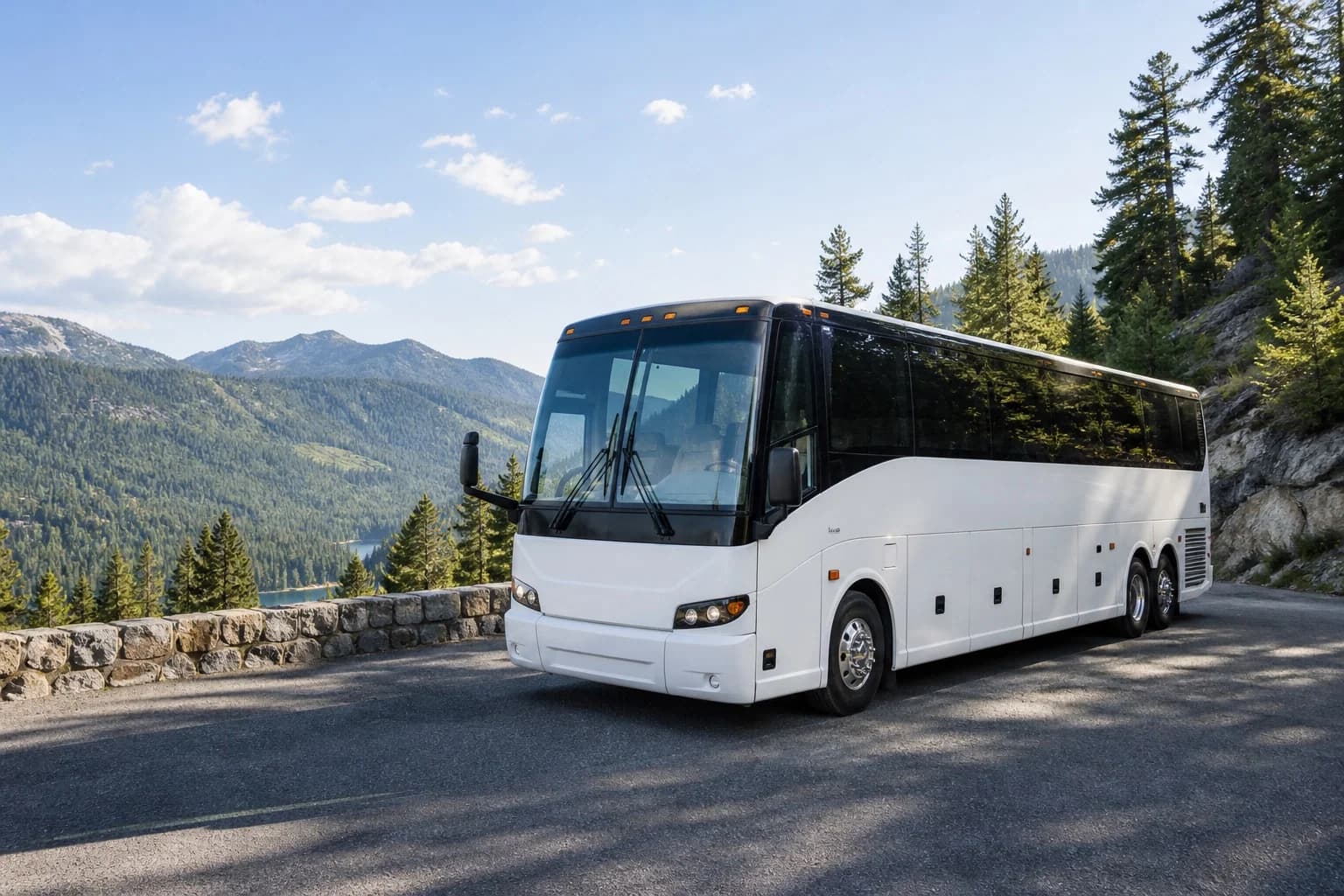
Coach or school bus
Rural camp roads and gravel — operators familiar with site access matter.
Sizing
How much vehicle 15 to 45 camp transfers passengers need
Most camp transfers groups we carry land between 15 and 45 passengers, and that spread crosses a real dividing line in the fleet. For about 15 people we would send an 18- to 22-passenger party bus, or a 16- to 22-passenger stretch limousine if the group wants a lounge feel. This is the size where a party bus starts to earn its place: standing headroom, perimeter seating and a real sound system. For 45, it is a 34- to 45-passenger party bus, or a 40-passenger coach if the trip involves luggage or a long highway leg. Above about thirty-five passengers the choice is really a comfort question: lounge seating and open floor, or forward-facing reclining seats with underfloor bays.
Read 45 as a maximum, not a comfort rating. A vehicle rated for 45 seats 45 adults shoulder to shoulder with nothing on the floor; put the same camp transfers group in coats with bags and equipment and it feels full at about 38. We size from your confirmed headcount plus two, so the friend who joins the night before has a seat.
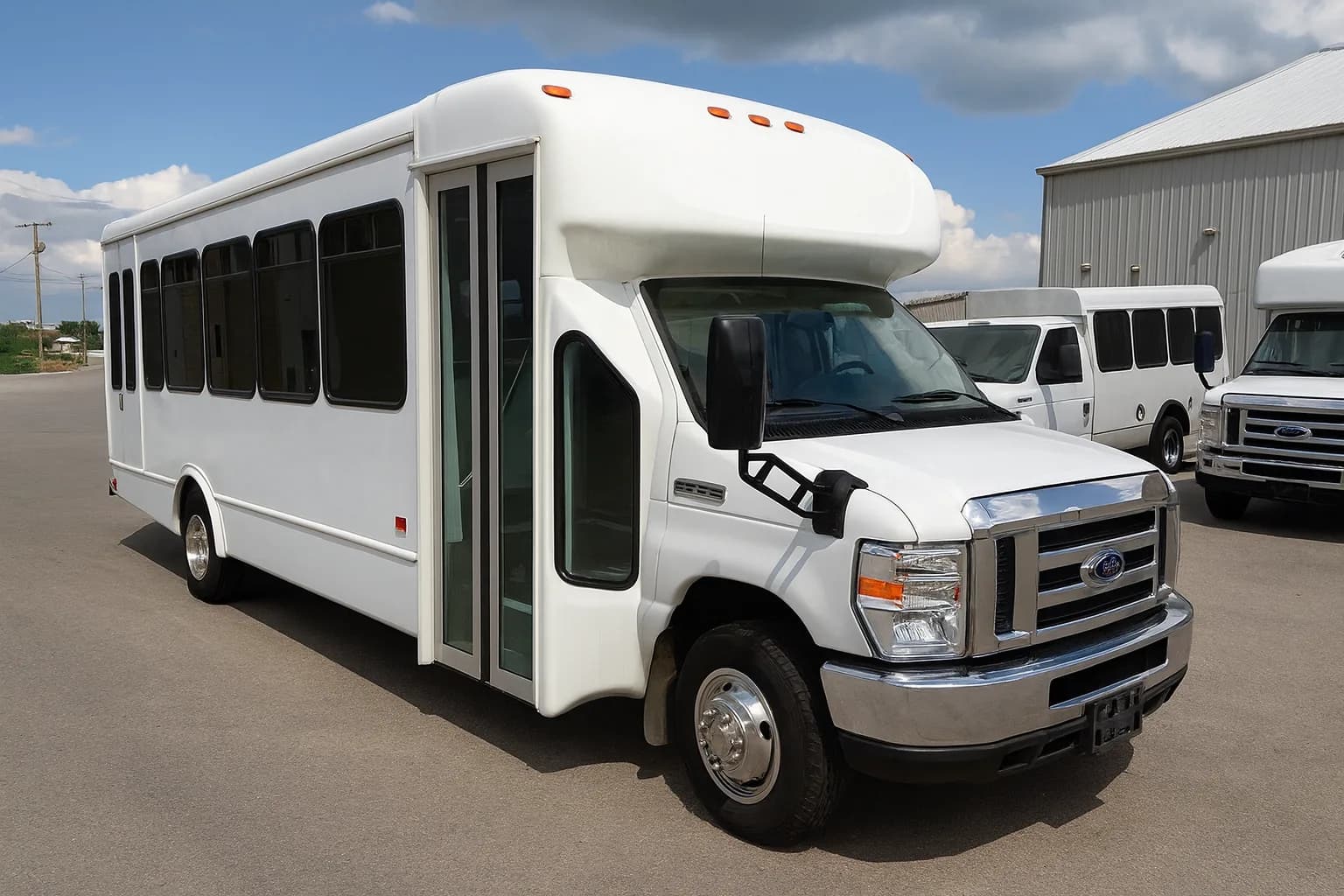
Bags quietly decide the answer on camp transfers runs. Party buses and stretch limousines have nowhere for suitcases, cases or equipment except between people; Sprinters, shuttles and motorcoaches have rear cargo areas or underfloor bays that swallow them without costing seats. Tell us what is traveling and we steer you to a vehicle with bays even if the seat count alone pointed elsewhere.
For this event we most often end up with coach or school bus. Rural camp roads and gravel — operators familiar with site access matter.
Access
Loading, staging and venue access for camp transfers
At the destination end the questions are clearance and turning. Museums, campuses and camp sites often have a car park a coach physically cannot enter — a low garage clearance, a tight one-way loop, or a gravel apron that will not take the weight. We check the arrival point in advance and, where it will not take a full-size vehicle, either plan the drop at the nearest workable point or size down to a shuttle that fits.
Risk
What goes wrong on camp transfers trips, and how we prevent it
On camp transfers trips the problems we see most are flight delays stack batches and remote cell coverage for meet-up. None of them is hard to fix a week out and all of them are expensive to fix on the day, so this is the list we work through with you while we build the quote.
Flight delays stack batches
This is on our checklist for the first call: we ask about it directly, and the answer goes on the agreement the chauffeur carries.
Remote cell coverage for meet-up
The fix is a question we ask before we quote; the answer is built into the schedule, not left to the night.
Alcohol and prohibited items
Student charters are alcohol-free without exception, and the rule is stated to the group and the organisers before the day rather than enforced by surprise.
Before you call
What to have ready when you call us about camp transfers
None of this has to be final. Rough answers are enough for us to size a vehicle and price a schedule, and they let us tell you straight away whether what you want to do fits the hours you have in mind.
Date and confirmed headcount
Most camp transfers groups run Split batches of 15–45 to match flight banks. Tell us where yours sits, counting the people actually traveling, and we size from that figure plus two.
Every stop in order
Starting with the first pickup address, with roughly how long you intend to spend at each. This is what turns a wish list into a timed itinerary.
The hours you expect to need
3–8 hours including airport staging. If your plan is longer or shorter, say so; we quote the hours you describe.
Luggage, gear and equipment
Bag count and anything oversized. It decides whether you need a vehicle with bays.
Lead adult and mobile number
The person traveling with the group who owns the count.
School loading instruction
Which gate, which time, and whether it clashes with bell times.
Accessibility needs
Any passenger who needs step assistance, a lift-equipped vehicle or a particular seat.
Timing
When camp transfers demand peaks
June–August turnover days; mid-summer visiting weekends. On those dates the popular sizes go first, minimum blocks get longer, and the freedom to move your pickup by half an hour disappears. If your date sits inside that window, hold the vehicle first and refine the route afterwards.
From our own bookings
What camp transfers requests look like
Across our bookings
The party bus trips we book fall on a Friday, Saturday or Sunday 87.4% of the time. Saturday inventory is the first thing to run out in any market.
Across our bookings
January–March carries 20.9% of our bookings.
Across our bookings
19% of graduation bookings come in inside a week of the date, and 23% land ninety days or more ahead.
Related events
Compare similar planning needs
Browse the full event transportation library, compare vehicle types and capacities, or find us in your city.
FAQ
Camp Transfers Transportation Questions
Direct answers for itinerary, vehicle, timing and contract decisions.
What size vehicle do most camp transfers groups need?
How far in advance should I book camp transfers transportation?
Which vehicle do you usually run for camp transfers?
What does a camp transfers quote include?
Can we add or change stops after booking camp transfers transportation?
Does the chauffeur stay with the group during camp transfers?
What happens if our camp transfers group is bigger than expected?
When is camp transfers demand highest?
Do you own the vehicles and employ the chauffeurs?
Sources and official references
- FMCSA — Look Before You Book
U.S. Department of Transportation · How to check any passenger carrier’s operating authority and safety record, including ours.
- NHTSA — School bus safety
National Highway Traffic Safety Administration · Federal guidance on transporting students, including charter-vehicle considerations.
Page content last reviewed 2026-09-13. Official rules change; confirm with the linked source before your trip.