Event transportation
Cruise Port Transfers Transportation
Cruise Port Transfers planning is about luggage volume, distance and time. Sprinters, shuttles and coaches carry bags; party buses and stretch limousines mostly do not. Long routes can trigger commercial driver hours-of-service limits, so we plan how the schedule is staffed, and whether an overnight or a second chauffeur is needed, at the quoting stage.
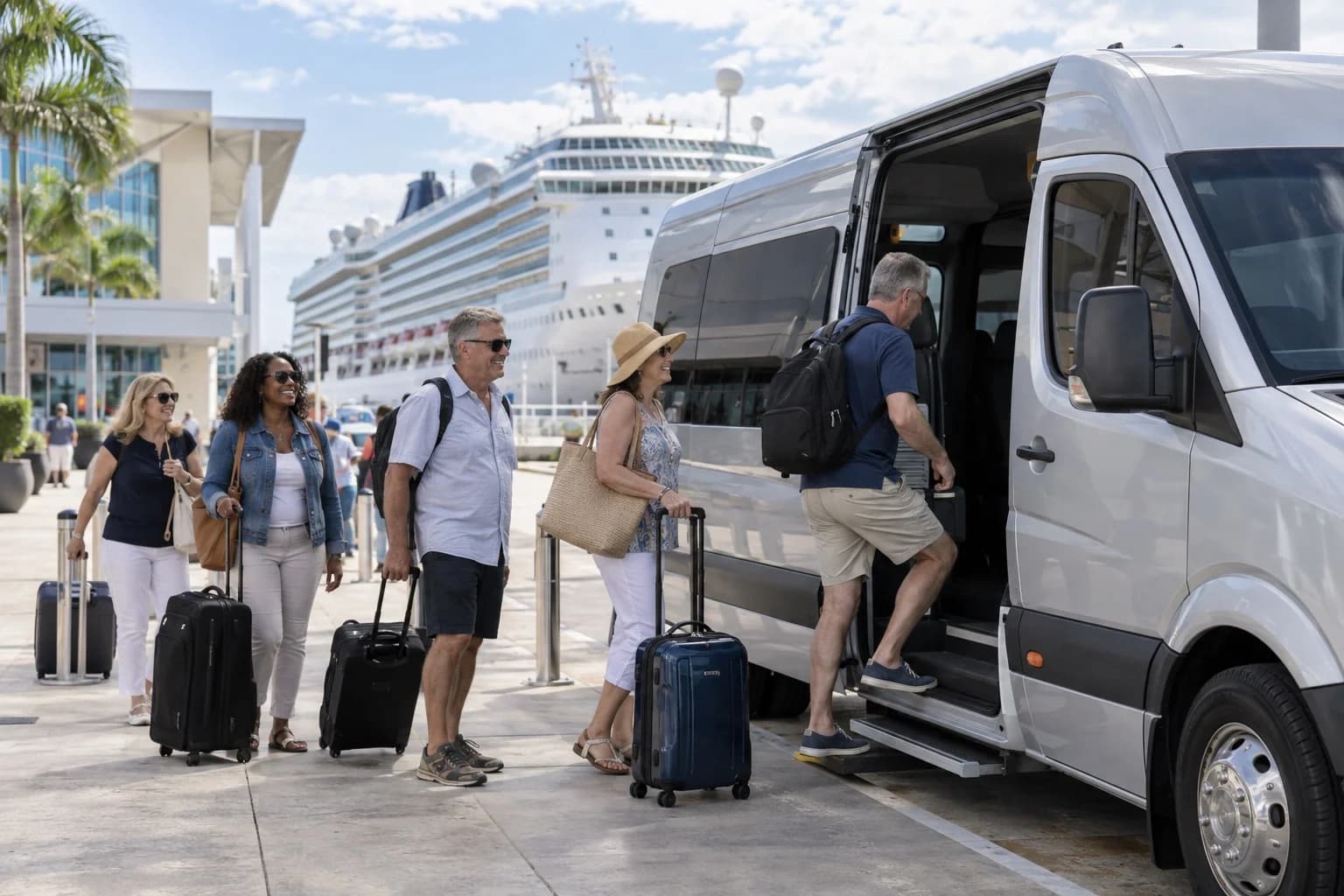
Begin your cruise vacation worry-free with coordinated port transfer transportation services. Our cruise port shuttle buses, sedans, and SUVs ensure timely arrival with room for all your luggage. Professional cruise port transfers so you never miss your departure.
Free Quote
Request Cruise Port Transfers Options
Reviewed by our booking team · Written contract before your date is held
Page-specific considerations
Build the itinerary before comparing prices
Planning headcount
10–55 depending on flight alignment.. We size from your confirmed passenger count plus two.
Timing
Single leg 30–90 minutes port-city; full service includes luggage meet. We quote the schedule you describe rather than a minimum block.
Timing pressure
Year-round in FL/TX/CA/Caribbean gateways; embark/debark same-day windows tight.
Lead time
4–12 weeks; peak weeks earlier.
Specific to this event
What cruise port transfers work demands that other trips do not
Cruise transfers have the hardest deadline of any trip we run: the ship sails whether the group is on it or not, and boarding closes an hour or more before departure. We plan the arrival at the port against the cruise line’s published check-in window with a buffer that is larger than the group thinks it needs, because port traffic on embarkation day is the worst of the week.
Ports direct group vehicles to specific drop lanes and some require a pre-registered vehicle; we handle both. Luggage is a suitcase per person and more, so the vehicle has bays. The return transfer on disembarkation day is scheduled against the ship’s arrival and the group’s customs clearance, which can take two hours, and the meeting point is agreed with the port.
On the day
How a cruise port transfers trip actually runs
Long routes bring the chauffeur’s duty day into the plan. Federal hours-of-service rules cap how long a driver may drive and how long a duty period may run, and those limits cover the whole day including waiting. For a long one-way run, an overnight or a multi-day trip we plan the staffing at quote time — a second chauffeur, an overnight for the driver, or a schedule shaped to fit inside a legal day — rather than letting it become a problem on the road.
On the clock, cruise port transfers charters usually run single leg 30–90 minutes port-city; full service includes luggage meet. We quote the schedule you describe rather than a minimum block, and if the route will not fit the hours you have asked for we say so at the quoting stage.
Vehicles we run for this
Coach or sprinter
Port traffic and staggered terminal security — book to ship boarding windows not just sailing time.
Sizing
How much vehicle 10 to 55 cruise port transfers passengers need
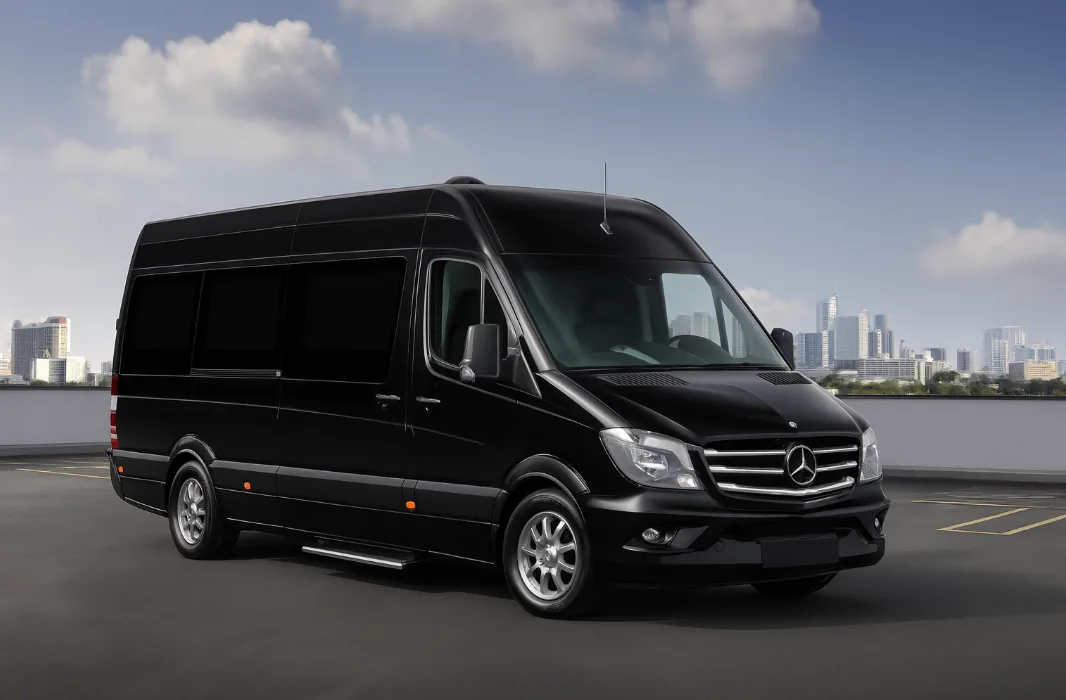
Most cruise port transfers groups we carry land between 10 and 55 passengers, and that spread crosses a real dividing line in the fleet. For about 10 people we would send a 10- to 14-passenger executive Sprinter or a 12- to 14-passenger stretch limousine. The Sprinter gives you forward-facing seats, an aisle and floor space for bags; the limousine gives you a lounge layout and almost no luggage room. For 55, it is a 46- to 56-passenger motorcoach. At this size the coach wins on every practical measure — forward-facing seats, luggage bays, climate control and a restroom on the larger units.
Read 55 as a maximum, not a comfort rating. A vehicle rated for 55 seats 55 adults shoulder to shoulder with nothing on the floor; put the same cruise port transfers group in coats with bags and equipment and it feels full at about 47. We size from your confirmed headcount plus two, so the friend who joins the night before has a seat.
Bags quietly decide the answer on cruise port transfers runs. Party buses and stretch limousines have nowhere for suitcases, cases or equipment except between people; Sprinters, shuttles and motorcoaches have rear cargo areas or underfloor bays that swallow them without costing seats. Tell us what is traveling and we steer you to a vehicle with bays even if the seat count alone pointed elsewhere.
For this event we most often end up with coach or sprinter. Port traffic and staggered terminal security — book to ship boarding windows not just sailing time.
Access
Loading, staging and venue access for cruise port transfers
Resort and lodge access is its own question. Mountain roads may require chains in season, some access roads are not rated for a full-size coach, and many lodges have a single turning circle a 45-footer cannot use. We check the final approach before quoting and, where the vehicle cannot make the last mile, we say so and plan the transfer rather than discovering it in the dark on snow.
Risk
What goes wrong on cruise port transfers trips, and how we prevent it
On cruise port transfers trips the problems we see most are flight delays miss ship and pier traffic peaks 10 a.m.–2 p.m. on turn days. None of them is hard to fix a week out and all of them are expensive to fix on the day, so this is the list we work through with you while we build the quote.
Flight delays miss ship
The fix is a question we ask before we quote; the answer is built into the schedule, not left to the night.
Pier traffic peaks 10 a.m.–2 p.m. on turn days
We build a margin for it into the schedule instead of hoping it does not happen, and we say how much margin when we quote.
Bags planned after seats
We ask for the bag count alongside the headcount and size the vehicle from whichever is the binding constraint.
Before you call
What to have ready when you call us about cruise port transfers
None of this has to be final; rough answers let us size a vehicle and price a schedule on the first call. 4–12 weeks; peak weeks earlier.
Date and confirmed headcount
Most cruise port transfers groups run 10–55 depending on flight alignment. Tell us where yours sits, counting the people actually traveling, and we size from that figure plus two.
Every stop in order
Starting with the first pickup address, with roughly how long you intend to spend at each. This is what turns a wish list into a timed itinerary.
The hours you expect to need
Single leg 30–90 minutes port-city; full service includes luggage meet. If your plan is longer or shorter, say so; we quote the hours you describe.
Luggage, gear and equipment
Bag count and anything oversized. It decides whether you need a vehicle with bays.
Accessibility needs
Step assistance, a lift-equipped vehicle, or a seat someone needs to be in.
Flight or sailing details
Numbers and times, so we can track and adjust rather than guess.
Bag and equipment count
Including skis, boards, golf bags, instruments and anything oversized.
Return plan
Whether the same vehicle returns, and whether it waits or comes back.
Timing
When cruise port transfers demand peaks
Year-round in FL/TX/CA/Caribbean gateways; embark/debark same-day windows tight. On those dates the popular sizes go first, minimum blocks get longer, and the freedom to move your pickup by half an hour disappears. If your date sits inside that window, hold the vehicle first and refine the route afterwards.
From our own bookings
What cruise port transfers requests look like
Across our bookings
Sports-event demand peaks in October — about 18% of bookings — with November next at 16%.
Across our bookings
Our busiest months are May, August, September and October; January and February are the quietest. Spring proms and graduations and early-autumn weddings and football are when popular vehicles are hardest to get on short notice.
Across our bookings
A 5-hour rental covers 20.2% of our party bus bookings.
Related events
Compare similar planning needs
Browse the full event transportation library, compare vehicle types and capacities, or find us in your city.
FAQ
Cruise Port Transfers Transportation Questions
Direct answers for itinerary, vehicle, timing and contract decisions.
What size vehicle do most cruise port transfers groups need?
How far in advance should I book cruise port transfers transportation?
Which vehicle do you usually run for cruise port transfers?
What does a cruise port transfers quote include?
Can we add or change stops after booking cruise port transfers transportation?
Does the chauffeur stay with the group during cruise port transfers?
What happens if our cruise port transfers group is bigger than expected?
When is cruise port transfers demand highest?
Do you own the vehicles and employ the chauffeurs?
Sources and official references
- FMCSA — Look Before You Book
U.S. Department of Transportation · How to check any passenger carrier’s operating authority and safety record, including ours.
- FMCSA hours-of-service summary
U.S. Department of Transportation · Why long-distance trips may need a second driver or an overnight stop.
- TSA — What can I bring?
Transportation Security Administration · Luggage planning for airport groups.
Page content last reviewed 2026-09-13. Official rules change; confirm with the linked source before your trip.