Event transportation
Trade Shows Transportation
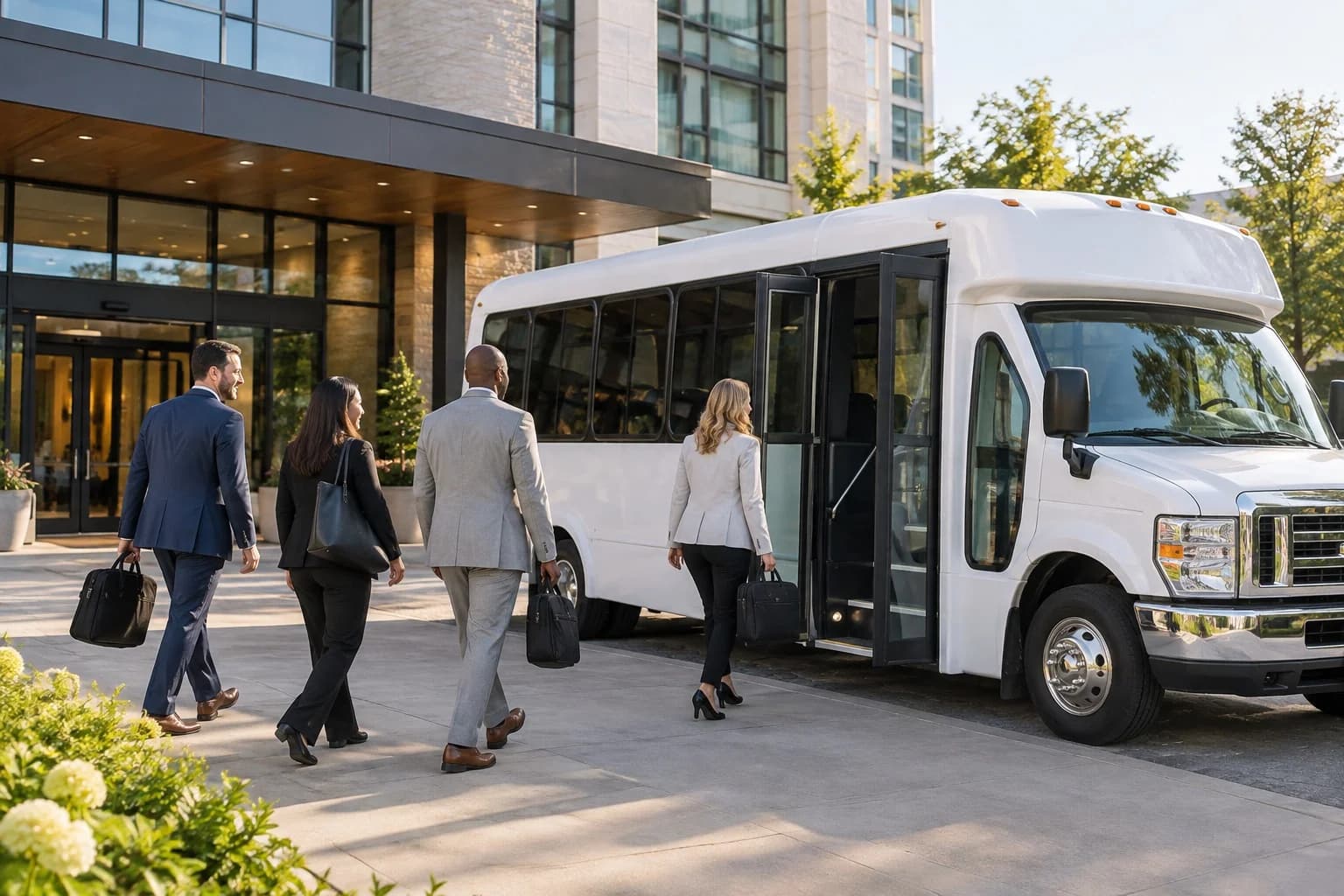
For trade shows the practical choices are executive Sprinters (8–14), shuttle buses (20–40) and coaches (40+), all with forward-facing seats. Plan around a passenger manifest, a single point of contact, loading instructions from the venue and an itemized invoice that separates base time, waiting time, gratuity and taxes.
Navigate trade show logistics effortlessly with coordinated group transportation. We provide shuttle buses, executive vans, and sedan service between hotels, convention centers, and airports. Dependable trade show transportation that keeps your team focused on business.
Free Quote
Request Trade Shows Options
Reviewed by our booking team · Written contract before your date is held
Page-specific considerations
Build the itinerary before comparing prices
Planning headcount
Booth teams 4–12; freight handled separately from passenger vans.. We size from your confirmed passenger count plus two.
Timing
Multi-day with early AM staff pulls and late teardowns. We quote the schedule you describe rather than a minimum block.
Timing pressure
Major halls fill Tue–Thu cycles; move-in/move-out Sundays heavy.
Lead time
Book with booth space; 12–26 weeks for large shows.
Specific to this event
What trade shows work demands that other trips do not
Trade shows add freight to the passenger problem. Booth materials, samples and demo equipment travel with the team more often than anyone plans for, and a shuttle full of people has nowhere to put a crate. We ask what is being carried at the same time as the headcount, and where the load-in is heavy we run the equipment on a vehicle with bays and the people separately, so neither waits on the other.
Load-in and load-out windows are assigned by the show, not chosen by you, and they are usually the tightest hours of the week. We build the vehicle schedule against the show’s published dock times rather than the exhibitor schedule, because the dock window is the one that will not move.
On the day
How a trade shows trip actually runs
Where the movement repeats — hotel to venue and back, several times across a day — we run it as a loop with a published interval rather than as on-demand pickups. A loop that leaves on a stated cadence is easier for attendees to use and far easier to keep on time than a shuttle that waits for stragglers, because a missed departure then costs one interval instead of derailing the schedule. We set the interval from the real drive time in the direction that is worst at that hour, not from an average.
On the clock, trade shows charters usually run multi-day with early AM staff pulls and late teardowns. We quote the schedule you describe rather than a minimum block, and if the route will not fit the hours you have asked for we say so at the quoting stage.
Vehicles we run for this
Cargo sprinter or passenger van for staff; motorcoach for hosted buyer tours
Dock appointments differ from attendee hotel loops.
Sizing
How much vehicle 4 to 12 trade shows passengers need
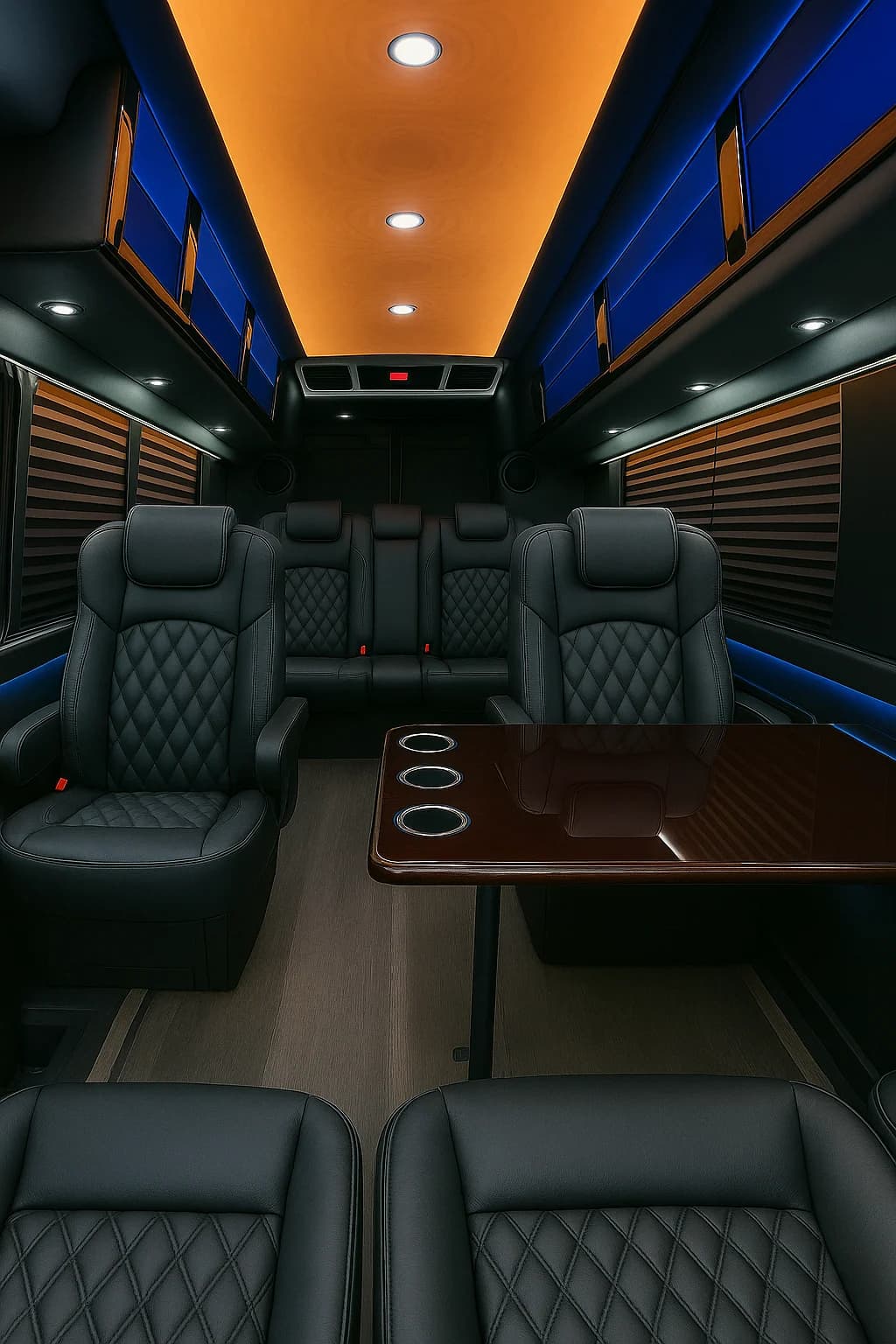
Most trade shows groups we carry land between 4 and 12 passengers, and that spread crosses a real dividing line in the fleet. For about 4 people we would send an 8-passenger executive Sprinter or an 8-passenger stretch limousine. Both load from the curb in under a minute and fit a standard hotel entrance, which matters more at this size than seat count does. For 12, it is a 10- to 14-passenger executive Sprinter or a 12- to 14-passenger stretch limousine. The Sprinter gives you forward-facing seats, an aisle and floor space for bags; the limousine gives you a lounge layout and almost no luggage room.
Read 12 as a maximum, not a comfort rating. A vehicle rated for 12 seats 12 adults shoulder to shoulder with nothing on the floor; put the same trade shows group in coats with bags and equipment and it feels full at about 10. We size from your confirmed headcount plus two, so the friend who joins the night before has a seat.
Bags quietly decide the answer on trade shows runs. Party buses and stretch limousines have nowhere for suitcases, cases or equipment except between people; Sprinters, shuttles and motorcoaches have rear cargo areas or underfloor bays that swallow them without costing seats. Tell us what is traveling and we steer you to a vehicle with bays even if the seat count alone pointed elsewhere.
For this event we most often end up with cargo sprinter or passenger van for staff; motorcoach for hosted buyer tours. Dock appointments differ from attendee hotel loops.
Access
Loading, staging and venue access for trade shows
Convention centers, hotels and office campuses each have their own rule about where a bus may stop, and the rule is usually stricter than the map suggests. Most convention centers have a motorcoach staging lane separate from the taxi and rideshare curb, and some require a load-in permit or an assigned window. Hotels frequently cannot take a full-height coach under the porte-cochere at all. We ask your venue contact for the loading instruction in advance and route straight to it, so the vehicle is never circling while your group waits.
Risk
What goes wrong on trade shows trips, and how we prevent it
On trade shows trips the problems we see most are confusing exhibitor freight rules with passenger drop-off zones and badge pickup lines delaying first shuttle loop. None of them is hard to fix a week out and all of them are expensive to fix on the day, so this is the list we work through with you while we build the quote.
Confusing exhibitor freight rules with passenger drop-off zones
We plan around it when we time the route, and we tell you where it bites before you commit rather than after.
Badge pickup lines delaying first shuttle loop
Our chauffeur is briefed on it before the trip, and your named contact has the number to call if it starts to happen anyway.
Gridlock the maps do not know about
Citywide events, marathons and street closures do not appear in default drive-time estimates. We check the closure calendar for your dates and build the interval around the real routing.
Before you call
What to have ready when you call us about trade shows
None of this has to be final; rough answers let us size a vehicle and price a schedule on the first call. Book with booth space; 12–26 weeks for large shows.
Date and confirmed headcount
Most trade shows groups run Booth teams 4–12; freight handled separately from passenger vans. Tell us where yours sits, counting the people actually traveling, and we size from that figure plus two.
Every stop in order
Starting with the first pickup address, with roughly how long you intend to spend at each. This is what turns a wish list into a timed itinerary.
The hours you expect to need
Multi-day with early AM staff pulls and late teardowns. If your plan is longer or shorter, say so; we quote the hours you describe.
Luggage, gear and equipment
Bag count and anything oversized. It decides whether you need a vehicle with bays.
The on-site contact
One name, one mobile number, reachable on the day. Not a group inbox.
Venue loading instruction
Whatever the venue told you about where buses stop, forwarded verbatim.
Billing details
Purchase order or cost center, the invoicing entity, and who signs off.
Timing
When trade shows demand peaks
Major halls fill Tue–Thu cycles; move-in/move-out Sundays heavy. On those dates the popular sizes go first, minimum blocks get longer, and the freedom to move your pickup by half an hour disappears. If your date sits inside that window, hold the vehicle first and refine the route afterwards.
From our own bookings
What trade shows requests look like
For this event
Corporate groups book 28 days ahead at the median. A quarter come in with fewer than 14 days to go, and a quarter book more than 48 days out.
For this event
Short notice is normal for corporate trips: 25% book inside two weeks of the date.
For this event
50% of corporate groups book four hours or less.
Related events
Compare similar planning needs
Browse the full event transportation library, compare vehicle types and capacities, or find us in your city.
FAQ
Trade Shows Transportation Questions
Direct answers for itinerary, vehicle, timing and contract decisions.
What size vehicle do most trade shows groups need?
How far in advance should I book trade shows transportation?
Which vehicle do you usually run for trade shows?
What does a trade shows quote include?
Can we add or change stops after booking trade shows transportation?
Does the chauffeur stay with the group during trade shows?
What happens if our trade shows group is bigger than expected?
When is trade shows demand highest?
Do you own the vehicles and employ the chauffeurs?
Sources and official references
- FMCSA — Look Before You Book
U.S. Department of Transportation · How to check any passenger carrier’s operating authority and safety record, including ours.
- FMCSA hours-of-service summary
U.S. Department of Transportation · Driver duty limits that affect all-day corporate itineraries.
Page content last reviewed 2026-09-13. Official rules change; confirm with the linked source before your trip.