Renting a party bus is supposed to be the safest way to enjoy a night out with your group. No designated drivers. No ride-share surge pricing at 2 AM. No splitting the group across multiple cars. A professional driver handles everything while your group celebrates. And when everything goes right, that is exactly what happens — a safe, worry-free experience from pickup to drop-off.
But the safety of your party bus experience depends entirely on the company you hire and the precautions your group takes. Not every company maintains its vehicles to the same standard. Not every driver holds the proper credentials. And not every group follows the common-sense rules that keep everyone safe during the ride. The rare but real horror stories in the news almost always trace back to companies that cut corners on insurance, maintenance, or driver qualifications. We own our buses and employ our chauffeurs precisely so none of those corners exist to cut.
Therefore, here are 15 essential safety tips that cover the entire party bus experience — from checking out the company before you book to staying safe onboard during the ride. Follow these guidelines and your biggest concern will be choosing the next song on the playlist.
Before You Book
1. Verify Insurance Coverage
Every legitimate party bus company must carry commercial auto liability insurance. Request the Certificate of Insurance (COI) and verify it with the insurance company. Federal financial-responsibility minimums for passenger carriers depend on seating capacity (higher for vehicles seating 16 or more); check the certificate against the FMCSA minimum for the bus your group will actually ride in. Any company that hesitates or refuses to hand over proof of insurance is an immediate red flag. Walk away and hire someone who runs legally. Ask us for ours and it will be in your inbox the same day.
2. Check Operating Authority
For any company running larger vehicles or crossing state lines, look up the USDOT number and MC number on the FMCSA website (safer.fmcsa.dot.gov). This free public database shows the safety rating, inspection history, crash record, and whether the operating authority is active and in good standing. An "out of service" or "not authorized" status means that company is not legally permitted to carry passengers. Run the check on us too — we would rather you booked with your eyes open.
3. Ask About Driver Qualifications
Your chauffeur should hold a valid Commercial Driver’s License (CDL) with a passenger endorsement, which federal rules require for any vehicle designed to carry 16 or more people including the driver (49 CFR 383.5). Ask whether the company runs background checks and drug testing on its drivers. We screen every chauffeur before hiring and keep up ongoing random drug testing and annual motor vehicle record reviews. A company that cannot confirm those practices may not be prioritizing your safety.
4. Read Reviews with Safety in Mind
When reading Google, Yelp, or wedding-site reviews, pay specific attention to comments about vehicle condition, driver professionalism, and any safety-related incidents. A pattern of reviews mentioning dirty vehicles, reckless driving, late arrivals, or unprofessional drivers indicates systemic issues that go beyond a single bad experience.
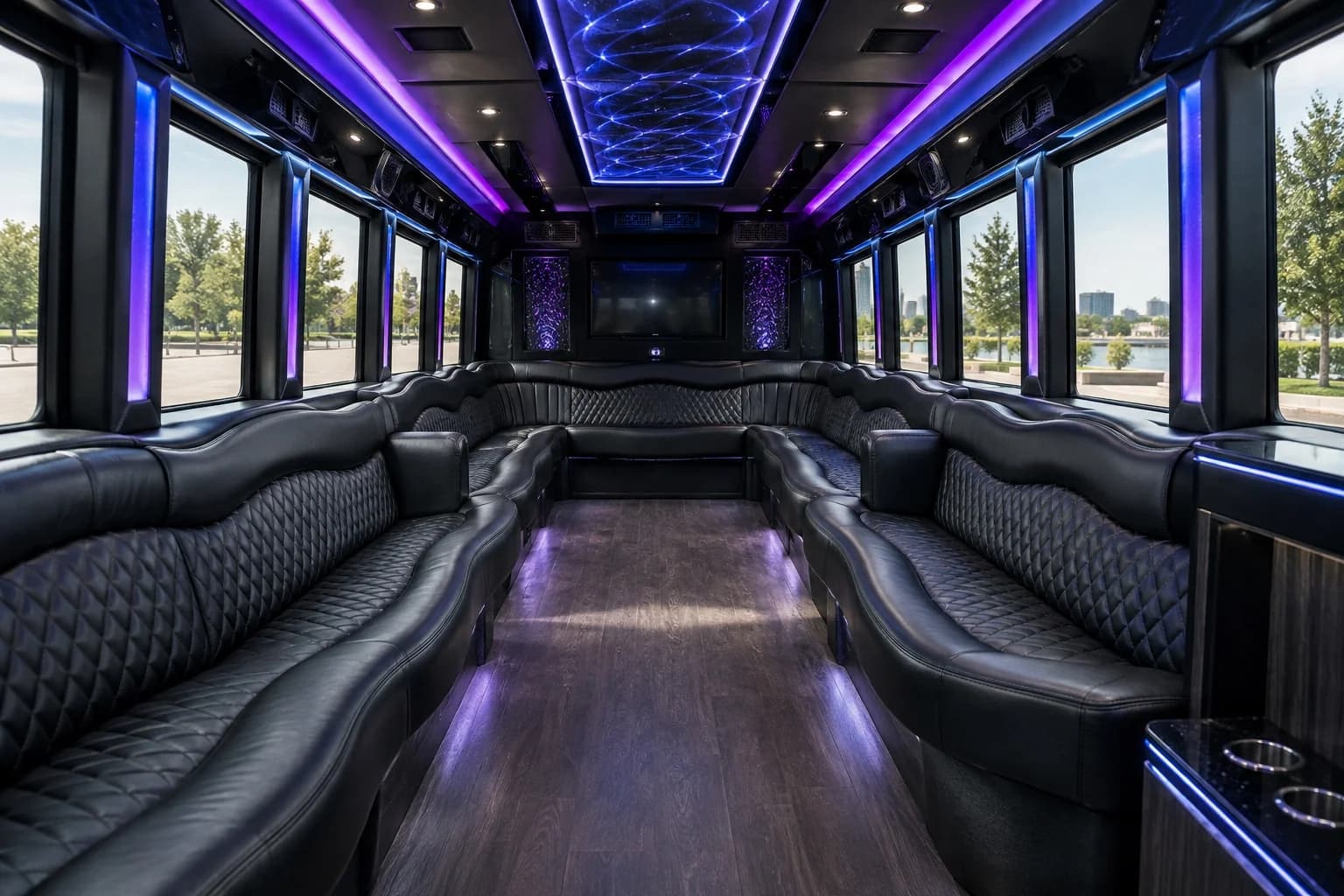
5. Request Photos of the Actual Vehicle
Stock photos on a website tell you nothing about the actual condition of the bus you will ride. Ask for recent photos of the specific vehicle assigned to your reservation — interior and exterior. If the company cannot or will not provide them, that is a concerning sign about their fleet's condition.
When You Board
6. Do a Quick Visual Inspection
Before everyone piles on, take 30 seconds to look over the bus. Are the tires properly inflated and free of visible damage? Are all lights working? Is the interior clean and well-maintained? Do the seats, handrails, and steps feel solid? Trust your instincts — if the vehicle looks poorly maintained, bring it up with the driver before departing.
7. Locate Emergency Exits
Identify the emergency exits and make sure they are not blocked by coolers, bags, or decorations. Most party buses have a rear emergency exit, a roof hatch, and one or more emergency windows in addition to the main entry door. A 5-second mental note when you board can make a critical difference in an emergency.
8. Note the Safety Equipment
Every commercial passenger vehicle should have a fire extinguisher and first aid kit at minimum. Larger vehicles should also carry emergency triangles and reflective vests. Confirm these items are present and accessible — not buried under a seat or hidden in a compartment nobody can reach.

During the Ride
9. Stay Seated When the Bus Is Moving
We get it — part of the party bus appeal is standing, dancing, and moving around. But sudden stops, turns, or lane changes can send a standing passenger tumbling. When the bus is in motion, try to stay seated or hold onto a handrail. If you are standing to dance, keep your center of gravity low and maintain contact with something fixed.
10. No Glass Containers
This is a universal rule and a non-negotiable safety measure. No glass bottles, no glass cups, no glass anything. A glass bottle dropping on a moving bus creates dangerous shards that are difficult to see and clean in dim party bus lighting. Use cans, plastic bottles, and disposable cups exclusively.
11–13. More Onboard Safety Tips
11. Keep the aisle clear — bags, coolers, and personal items should be stowed under seats or in designated storage areas, not on the floor where people walk. 12. Do not distract the driver — professional drivers are trained to manage party environments, but direct interaction with the driver should be limited to necessary communication through the designated group leader. 13. Have a sober point of contact — designate one person in the group who stays relatively sober and has the driver's phone number, the dispatch number, and awareness of the itinerary.
14. Never Stick Limbs Out Windows
It sounds obvious, but it is one of the most common safety violations on party buses. Hanging arms, legs, or heads out of windows or sunroofs while the vehicle is moving is extremely dangerous. Passing vehicles, road signs, tree branches, and bridge structures all pose serious risks. Keep all body parts inside the vehicle at all times.
15. Follow the Driver's Instructions
Your driver is the safety authority on the bus. If they ask everyone to sit down, do it. If they stop the bus for safety reasons, respect the decision. Professional drivers make judgment calls based on road conditions, weather, traffic, and passenger behavior — trust their experience and follow their lead.
Know Exactly Who Is Driving You
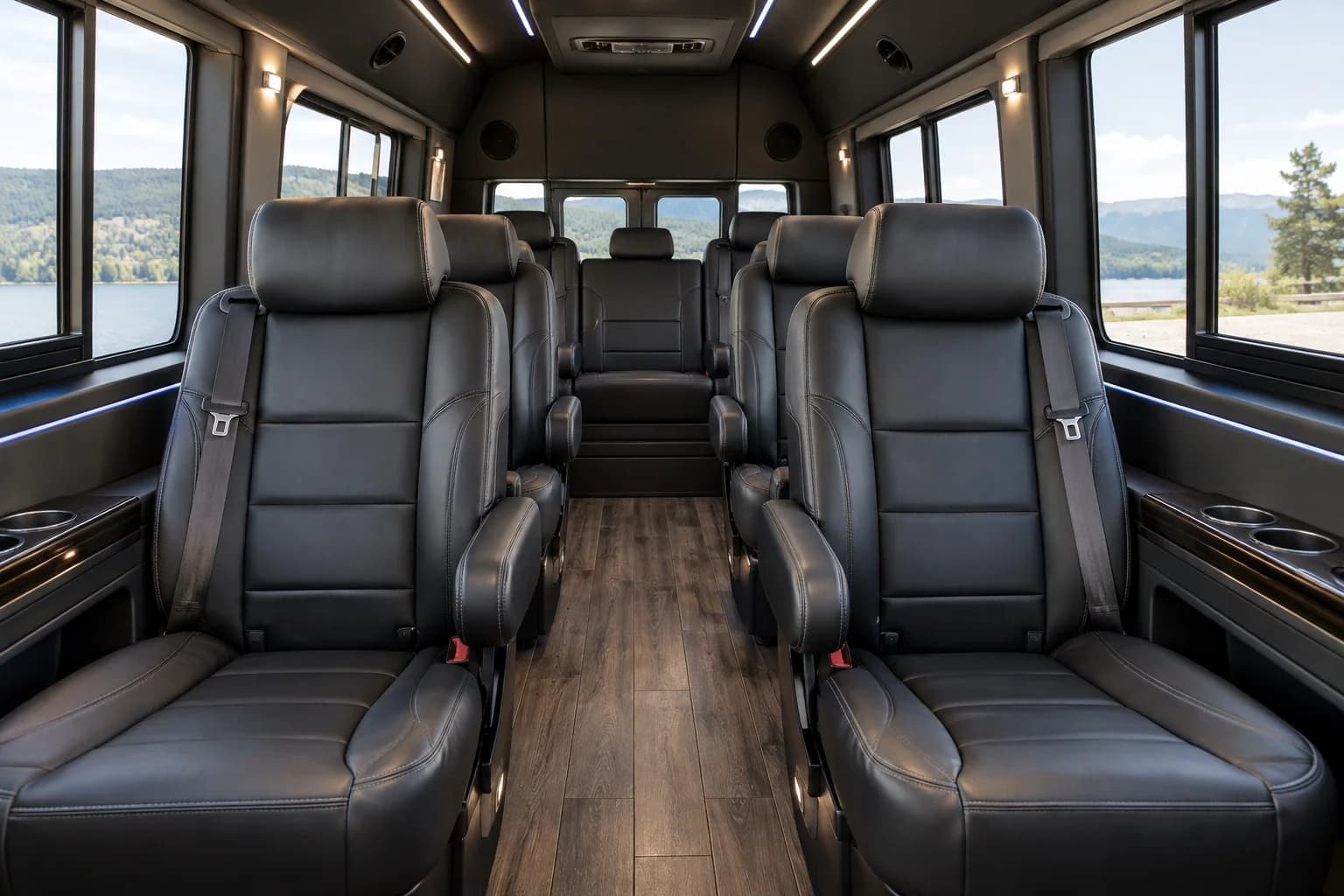
Ask us for the company name on your contract, our operating authority and insurance, and the exact bus from our fleet — all of it in writing before you pay.
Why Safety Starts with Your Booking Choice
The most important safety work happens before the bus ever pulls up: know which company is carrying you, check its operating authority and insurance, read whatever safety records are public, and get the exact vehicle and the driver requirements in writing. A word-of-mouth referral is not a substitute for those checks. Call 844-725-4257 and we will walk you through every one of them on our own trip, then put the bus, the chauffeur’s hours and the flat total in your contract before you pay a cent.